

The Books I Loved, and the Books I Left Behind, in 2025

I’ve spent a lot of time and energy in 2025 promoting my own book, so I’m very happy to be talking about other people’s. In no particular order, here are my favourite books of 2025 (and some I didn’t get along with).
O Brother - John Niven
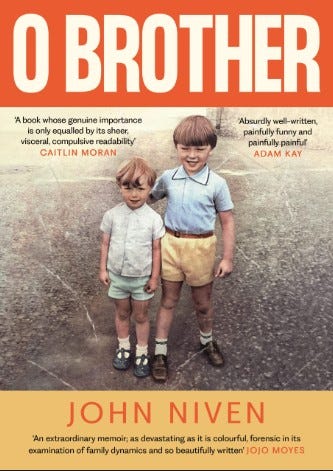
It’s rare to come across a novel set in Scotland that feels truly authentic, but O Brother captures the Scotland I know intimately. John Niven has this remarkable ability to push things to their limits without ever tipping into excess. The portrayal of family in this book is so real, with pain and love existing side by side, humour and despair rubbing up against each other, truth and memory, too. There were so many times I found myself nodding in recognition, deeply aware of the emotional complexities at play. Niven’s honesty is stripped of performance, making this book all the more compelling. The ending destroyed me in a way few books can. I think about it all the time and this book is firmly one of my all time favourites.
The Wren, The Wren - Anne Enright
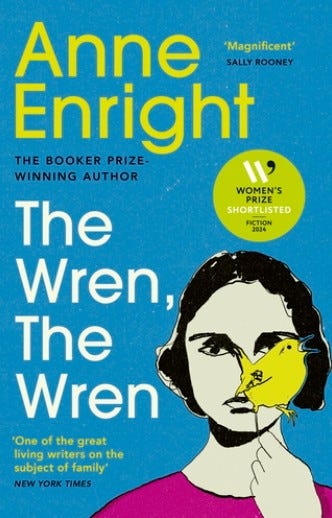
The Wren, The Wren was recommended to me by a friend last month, and I’m almost embarrassed to say I hadn’t heard of Anne Enright until then. This book stands out for its unparalleled portrayal of women’s experiences of sex, relationships, and the body. There were moments when I had to put the book down and leave it for a couple of days because it hit so close to home. Enright’s ability to capture the intricacies of human experience is extraordinary. Such is the depth of her insight, I found myself wondering if she has perhaps lived a thousand lives. It’s also exceptional at excavating generational trauma, unearthing the layers of inherited pain and emotional complexity that shape her characters’ lives. I plan to read everything she has written. Currently half way through The Green Road which is brilliant.
One River - Wade Davis
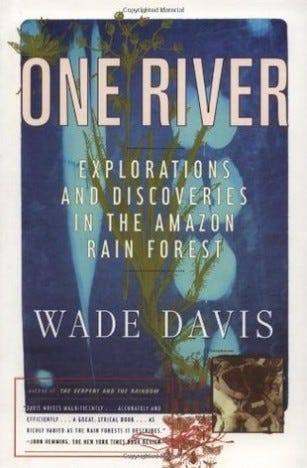
As someone fascinated by plants and the Amazon rainforest, One River is a book I hold dear. It blends ethnobotany, history, memoir, and biography into an expansive yet intimate exploration of the Amazon. It’s one of those rare books that shifts your perspective, not just about the rainforest, culture, and history, but about our relationship to the natural world, particularly as I have grown up absorbing a Western viewpoint. I loved this book so much that I bought its companion, a collection of medium-format photographs taken in the Amazon in the 40s and 50s by botanist Richard Evans Schultes. This book is more than just an intellectual exploration; it’s a profound, immersive, and important journey.
A Manual for Cleaning Women - Lucia Berlin
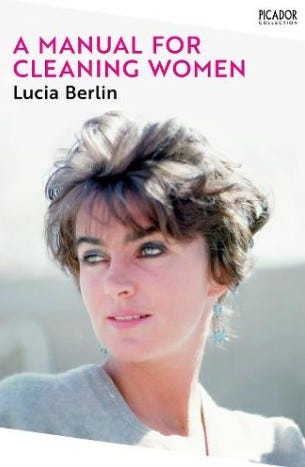
Most of the short stories I’d read up until this year had been by men (ridiculous, I know!), but this year I made a conscious effort to read as many short stories by women as I could. Writers like Lorrie Moore, Wendy Erskine, Lydia Davis, Amy Hempel, and Lucia Berlin all stood out in their own ways, and while I loved them all, it was Berlin’s perspective that really resonated with me. Many of the stories in A Manual for Cleaning Women feel like autofiction, where the line between the author’s life and the characters’ lives is blurred. It’s this, I think, that makes Berlin’s writing so compelling. There’s a real generosity in it too. A willingness to be vulnerable that is rare. In Berlin’s hands, characters become deeply human, full of both darkness and light and she approaches it all with such honestly, compassion and empathy.
It’s also important to acknowledge that books are personal. What works for one person might not for another, and that’s okay. I still feel a twinge of shame when I bail on a book, but honestly, life’s too fucking short.
Take Hamnet by Maggie O’Farrell, for instance. The concept is brilliant, and the writing is great, but I found myself completely disengaged a third of the way in. It just wasn’t for me.
With Orwell’s Roses, I struggled through it, having to re-read sentences to absorb the meaning. Yet when I wasn’t reading it, it was all I could think about. I find that with a lot of Rebecca Solnit’s work, to be honest. It’s the kind of writing that demands slow reading, and at this stage, I’m more in the mood for books that I can devour, but I’m sure I’ll return to it someday.
Then there’s I’m Glad My Mom Died by Jennette McCurdy. The title is a gut punch, but the writing just felt lacklustre for me.
And Shuggie Bain. I really, really wanted to love it (everyone else did!), but if I didn’t know it was written by a man, I would’ve guessed it as soon as I read the female characters. I grew up very poor in Scotland in the 80s and 90s, my family are from Glasgow. I know the Scotland Douglas Stuart is writing about, but it felt so flat and inauthentic to me, melodramatic in a way I couldn’t connect with.
Finally, Stories Of Your Life And Others by Ted Chiang. I hated it. Got three stories in and felt no shame when I bailed on this one. I have to stop taking book recommendations from my first ex-husband ;)
And as for what’s on my reading list so far for 2026?
Land Beneath the Waves – Nic Wilson
Floating – Joe Minihane
Lose Your Mother – Saidiya Hartman
Mother Mary Comes to Me – Arundhati Roy
Wayward Lives, Beautiful Experiments – Saidiya Hartman
Everything by Anne Enright.
Hope you all had a wonderful reading year.
Here’s to the books we love but also to the books we hate.